Microcement cost per m² and what the price depends on
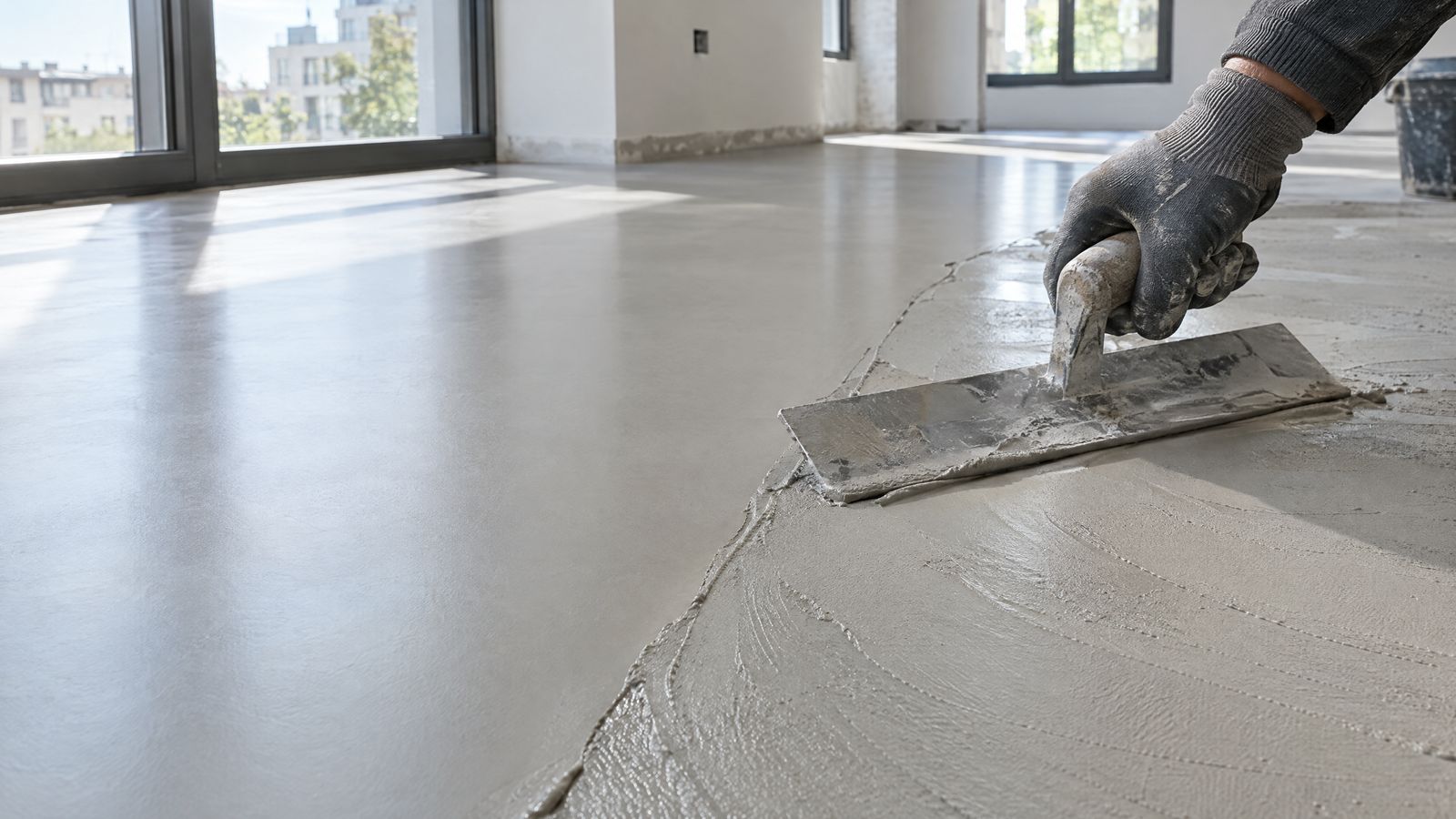
Microcement cost per m² is not a single figure. It depends on the substrate's condition, the size and shape of the space, the system and texture you choose, waterproofing in wet areas and the protective topcoat. Small areas and bathrooms cost more per m², as preparation is the same whatever the size. We give the exact price after assessing the substrate, in a written quote for all the work.
Key facts
- Microcement is applied by hand in 5 to 7 layers. The final layer is 1 to 2 mm thick.
- It goes over existing tiles, marble, terrazzo or wood without demolition, as long as the substrate is solid.
- Installing the base system takes at least five days, plus time to prepare the substrate.
- We work with two systems: ARDEX panDOMO and FORCRETE from the UK.
What is included in the cost of microcement?
The price of installed microcement covers substrate preparation, the material for every layer, hand application, the protective topcoat and, in bathrooms and showers, waterproofing. The price of the material in a shop covers only part of that. So two quotes can only be compared once it is clear what each one includes.
| Item | What it covers | What it depends on |
|---|---|---|
| Substrate preparation | Cleaning, repairing cracks and preparing the surface for the first layer | The condition of what is underneath: tiles, screed, plasterboard, wood |
| Material | Every layer of the system, from the base coat to the final one | The system, texture and floor area |
| Hand application | 5 to 7 layers applied with a trowel, with drying time between layers | The shape of the space, corners, walls and worktops |
| Waterproofing | A waterproof layer under the microcement in wet areas | Whether a bathroom or shower is being done |
| Protective topcoat | A sealer that protects the surface and sets the sheen | What it is for: floor, wall or worktop |
| Protection until you move in | Protective sheeting and MDF boards over the finished floor | Whether other trades work in the space after us |
What affects microcement cost per m²?
Microcement cost per m² depends on seven things: the condition of the substrate, the size and shape of the space, whether it is a floor, a wall or both, the system and texture, wet areas, the protective topcoat and the stage of the works. The substrate moves the price most, because it can only be judged on site.
The condition of the substrate
Microcement follows the surface beneath it. If individual tiles are loose or the concrete slab is cracking, that has to be repaired before the first layer, otherwise the crack comes through to the surface. Solid tiles with no hollow sound need less preparation than a damaged screed. That is why we assess the substrate before the quote, not after.
Floor area and the shape of the space
A small area costs more per m² than a large one. Preparation, getting the team on site and drying time between layers are the same for a hallway as for a living room. Corners, stairs, niches and transitions from floor to wall take more hand work than an open, flat surface.
Floor, wall or both
Walls and worktops are done differently from floors. When the floor and walls are done in the same tone, you get one surface with no edge and no joint between them, but that also means more hand work where they meet. For a kitchen worktop we use a heavier-duty protective topcoat, because a worktop has to cope with hot pans, oil and lemon.
System and texture
We work with ARDEX panDOMO and FORCRETE, in three textures: Classic (a smooth, calm surface), Micro-Granite (a fine stone grain) and Micro-Stone (a coarser grain, close to terrazzo). The texture changes the make-up of the material and the way we work, so it appears as a separate line in the quote. You can see the colours and textures on the microcement page.
Bathrooms and showers
In wet areas we lay waterproofing under the microcement and choose the protective topcoat according to how humid the room is. If a made-to-measure shower tray, washbasin or bath is done in the same material, that goes into the quote as well.
Protective topcoat
The final coat protects the surface and sets its look: matt, satin or semi-gloss. Busy walkways and worktops need stronger protection than a bedroom wall. The protective coat is renewed over time, with no demolition and no reinstallation.
Stage of the works
Microcement goes in last, once all other work is finished and before the skirting boards are fitted. If other trades come in after us, we cover the finished floor with protective sheeting and MDF boards. This is agreed in advance, because it goes into the quote. Nobody can live in the space during installation, because the layers must not be walked on while they dry.
Why does microcement cost more per m² in a bathroom?
Microcement in a bathroom costs more per m² than microcement in a living room for three reasons: a bathroom is a small area that needs the same preparation, it has many corners and transitions between floor and wall, and it needs waterproofing under the microcement.
The biggest difference compared with new tiles is what you avoid: no chiselling out old tiles, no rubble to take away and no skip outside the building. You can read more about how microcement works in wet areas on the microcement page.
Why doesn't the price of a microcement kit tell you what a floor costs?
The price of a microcement kit in a shop is for the material, not for an installed floor. It does not include substrate preparation, waterproofing, the work on 5 to 7 layers, drying between layers or the protective topcoat. That is why the price of the material cannot be compared directly with a contractor's price per m².
Microcement is made by hand. Every layer is applied with a trowel, and the trowel marks and slight variations in tone are part of the material. Without experience you can end up with a surface that cracks or shows visible joins between areas done at different times, and a fault like that cannot be repaired locally.
Is microcement more expensive than tiles?
Microcement and tiles should be compared on the cost of the whole job, not the price of the material per m². When old tiles are removed to lay new ones, the price includes demolition, taking away the rubble, preparing the substrate again and grouting. Microcement over existing tiles skips most of that.
| New tiles replacing old ones | Microcement over existing tiles | |
|---|---|---|
| Demolition and chiselling | Yes | No |
| Rubble removal and a skip | Yes | No |
| Grout lines | Yes | No, the surface is one continuous piece |
| Edge between floor and wall | Yes | No |
| Dust | A lot, from removing the tiles | Little, the work is dry with no chiselling |
The condition is that the existing tiles are solid. If some are loose or have come away, that is dealt with during substrate preparation, before the first layer of microcement.
How do you get an accurate quote for microcement?
You get an accurate microcement quote once the substrate has been assessed. The floor area alone gives a rough idea, not a price, because only on site can we see what is underneath and how much preparation it needs. The quote is in writing and lists all the work, so you know in advance what you are paying for.
- View samples at our showroom and choose the texture and colour.
- Book an on-site assessment of the substrate.
- Receive a written quote covering all the work.
- Agree an installation date, allowing at least five days for the base system.
- Take over the finished space at handover, with instructions on how to look after it.
For a first assessment, send us the location, what the space is used for and the approximate floor area through the enquiry form. If you have photos of the existing floor, send them to info@ardes.rs.
How do you compare two microcement quotes?
Two microcement quotes should be compared line by line, not on the total price per m². A lower price often means something has been left out: substrate preparation, waterproofing or the protective topcoat. Before you decide, check that each quote answers the following questions.
- Is substrate preparation included, and what exactly does it cover?
- Which system will be installed, and in how many layers?
- Is waterproofing included in the bathroom and shower?
- Which protective topcoat is applied, and how many coats?
- Is protection of the floor until you move in included, if other trades work afterwards?
- Who renews the protective coat when the time comes, and how?
Frequently asked questions
How much does microcement cost per m² in Serbia?
Microcement cost per m² depends on the substrate, floor area, system, texture and whether a bathroom is involved. That is why the only responsible price is one given after the substrate has been assessed. A price per m² given over the phone, without seeing the substrate, usually does not include all the work.
How much does microcement over tiles cost?
The cost of microcement over tiles depends on the same things as usual, but it does not include demolition, rubble removal or a skip. The condition is that the tiles are solid. If some are loose, that is dealt with during substrate preparation and listed in the quote.
Is it cheaper to buy the material and do it yourself?
The material costs less than an installed floor, but microcement is hand work in 5 to 7 layers. Without experience you can get cracks and visible joins, and faults like that cannot be repaired locally. Before deciding, compare the cost of the material with the cost of an installed floor for the same space.
What is included in a microcement quote?
Our quote lists substrate preparation, every layer of the system, hand application, waterproofing in wet areas, the protective topcoat and, where needed, protection of the floor until you move in. Every item is set out in the quote before work starts.
How long does microcement installation take?
Installing the base microcement system takes at least five days, plus time to prepare the substrate. You cannot live in the space while the work is under way, because the layers must not be walked on while they dry.