
EP · 01Matt
Linen
An epoxy floor is a resin-based surface. It is applied as a liquid and flows out by itself into a flat surface without joints. The layer is 1.5 to 3 mm thick, and industrial systems go above 5 mm, depending on the load.
It comes in a full range of colours, from neutrals to bold accents, and in decorative variants: coloured flakes, marbled effects and clear layers over a graphic design.
It withstands chemicals, impacts and wear, and is easy to clean and disinfect. In a space with constant traffic of people and equipment, a good-quality epoxy floor lasts up to ten years.
Epoxy or microcement? Epoxy carries heavier loads and is easier to disinfect, so it suits warehouses, kitchens and laboratories. Microcement is installed over the existing floor and has a mineral look, so it suits flats, boutiques and offices. If you are not sure what you need, tell us what the space is used for and we will suggest a solution.
Epoxy floors are used in these spaces, with the right protective topcoat and a properly prepared substrate.
Car showrooms, galleries and brand spaces. A glossy or matt surface that reflects the light back.
Industrial interiors, open-plan flats and studios that need one continuous floor.
Commercial kitchens, laboratories, clinics and fitness studios.
Warehouses, production facilities, garages and vehicle workshops, with a thickness matched to the expected load.
The full RAL range in three levels of sheen, plus decorative variants: flake blends and marbled effects. Everything is sampled on 30×30 cm boards before the project is confirmed.
The colours on screen are only a rough guide. Before the project is confirmed, we pour 30×30 cm sample boards and you choose from those.
It all starts at your place, with an assessment of the space and the substrate. How long it takes depends on the floor area and on the condition of the substrate.
Choosing the resin class according to load, chemical exposure and expected traffic.
Mechanical grinding, opening the pores, filling cracks and levelling.
A penetrating primer for a strong bond with the substrate, plus a vapour barrier where needed.
A self-levelling resin layer, poured and then worked to break up air bubbles.
A clear topcoat in the required level of sheen, with UV stability.
Epoxy floors: answers to the questions we hear most often from clients and the designers behind their projects.
Any hard, solid surface, above all concrete, and with the right preparation also stone or marble. Wood is not a good base. Wood shrinks and expands with temperature and humidity, so the epoxy layer cracks over time.
It withstands wear, heat, strong sunlight and scratches from moving equipment. The thickness is chosen according to the load: 1.5 to 3 mm for standard spaces, while industrial systems go above 5 mm. To stay that way, the floor needs regular cleaning and protection from extreme heat and from impacts by very heavy equipment.
Up to ten years in a space with constant traffic of people and equipment, such as a shopping centre car park. Its lifespan depends on the resin class, how the space is used and how it is maintained. After that, the floor is repaired or a new layer is applied.
Epoxy carries heavier loads and is easier to disinfect, so it suits warehouses, kitchens and laboratories. Microcement is installed over the existing floor and has a mineral look, so it suits flats, boutiques and offices. If you are not sure what you need, tell us what the space is used for and we will suggest a system.
Read more in Microcement, epoxy or terrazzo? Types of flooring compared.
Yes, garages and vehicle workshops are one of its typical uses. The floor has no joints, withstands oil and chemicals and is easy to wash. We choose the thickness and resin class depending on whether only cars come in or heavier equipment as well.
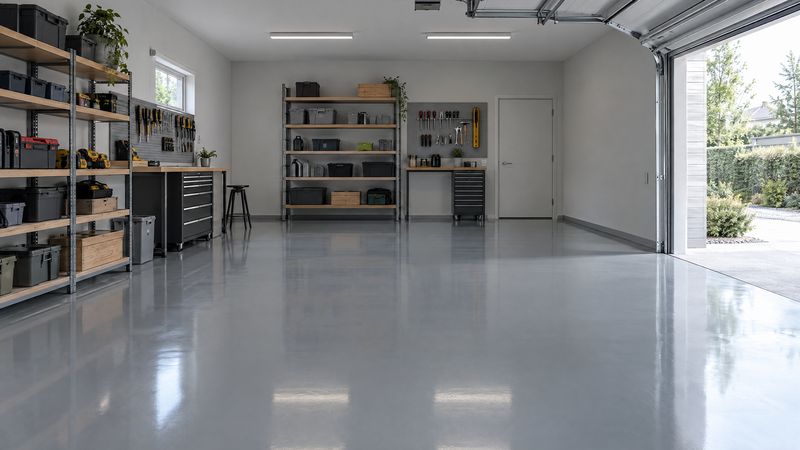 Epoxy floor cost and what affects it in flats, shops and garagesWhat goes into epoxy floor cost per m²: the concrete, resin thickness and grade, use of the space and topcoat. How flats, shops and garages differ.Read the article
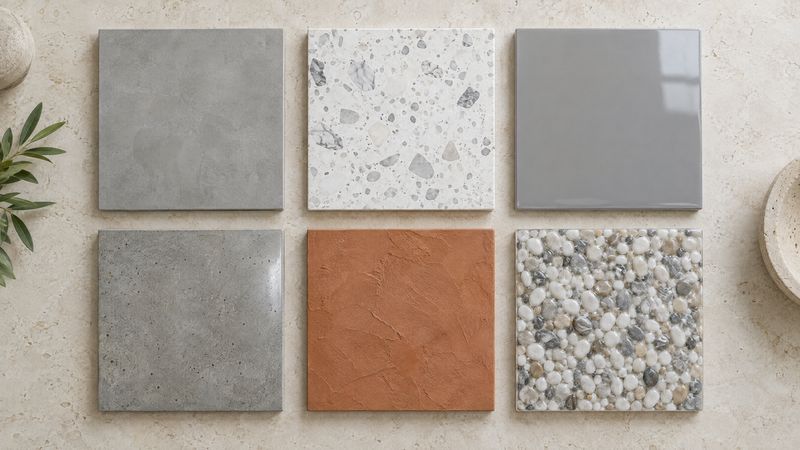 Microcement, epoxy or terrazzo? Types of flooring comparedMicrocement, epoxy, terrazzo, polished concrete, stone carpet and clay plaster compared in one table, and which type of flooring suits which room.Read the article
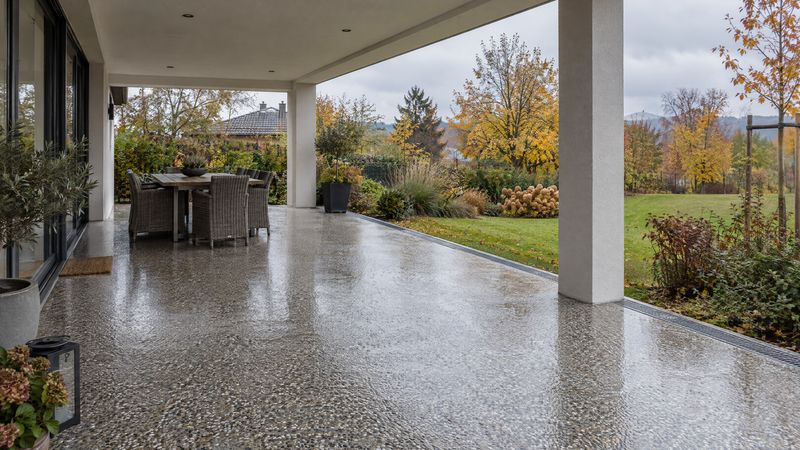 Best flooring for a terrace, stone carpet, tiles, terrazzo or epoxyHow to choose flooring for an open terrace: drainage, slip, sun and frost, joints. Stone carpet compared with tiles, terrazzo, epoxy and wood.Read the article
Your enquiry will be tagged for Epoxy floors. We get back to you with an estimate and a suggested appointment to see the samples.
We follow the same process on every project, from a flat to an office building.