Microcement vs tiles in the bathroom, an honest comparison
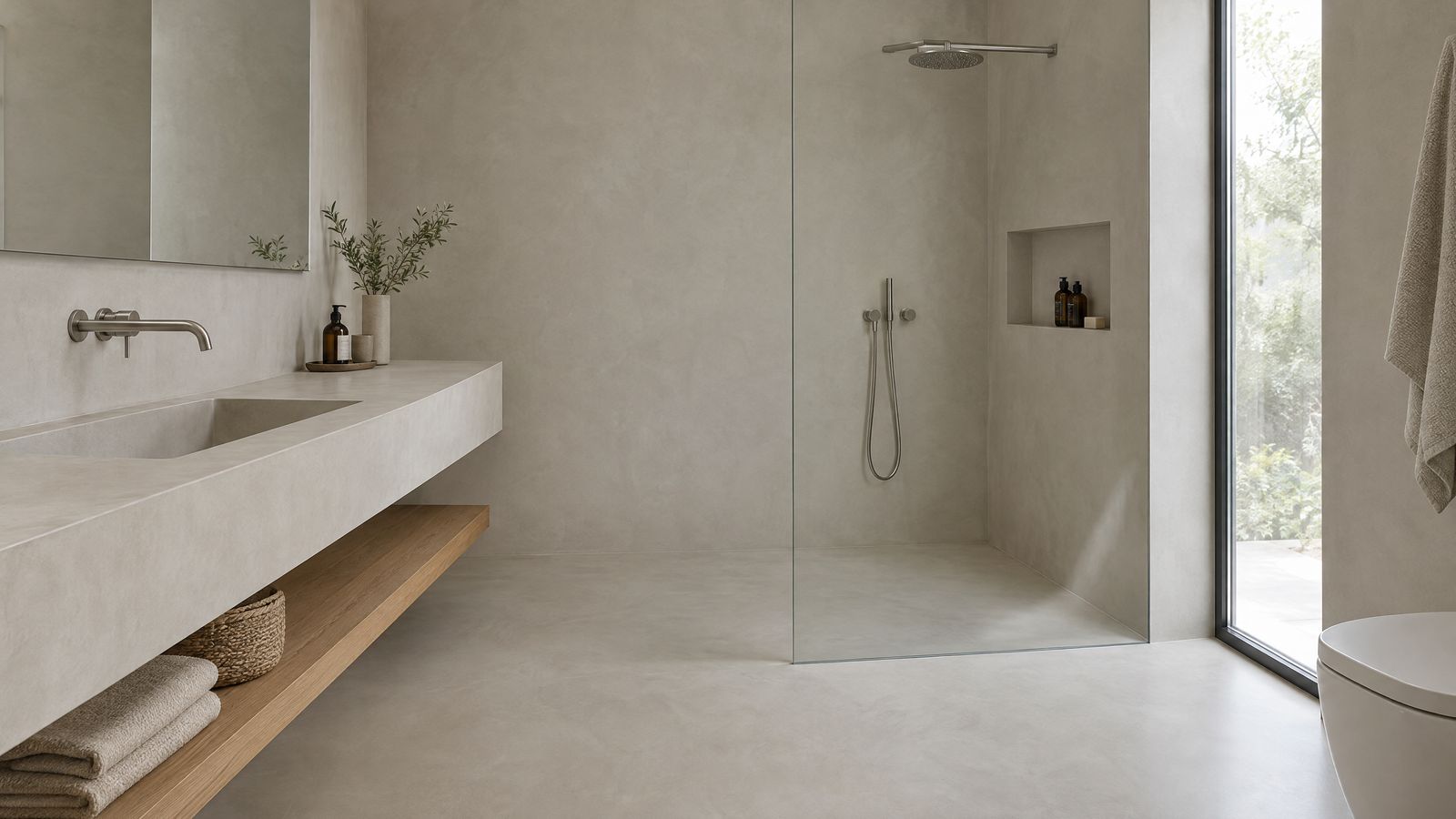
Compared with tiles, microcement in a bathroom gives one surface without joints, goes over existing tiles without demolition and, with a waterproof system and waterproofing underneath, works in the shower too. We can make the shower tray, washbasin and bath in the same material. Tiles are the better choice when you want a completely uniform factory finish or a particular pattern, or do not want to worry about cleaning products.
Key facts
- In bathrooms we lay waterproofing under the microcement.
- With a waterproof system, microcement also goes into the shower.
- We make shower trays to measure, ready for microcement, with a linear or round drain.
- We make the washbasin and bath in the same material, so the floor, walls and bath remain one surface.
- Installing the base system takes at least five days, plus time to prepare the substrate.
What is the difference between microcement and tiles in a bathroom?
Microcement and tiles in a bathroom differ in joints, in how they are installed and in how they look. Microcement is one surface without joints, applied by hand over the existing substrate, so every bathroom turns out slightly different. Tiles are uniform from the factory and laid with grout lines, and replacing old tiles usually starts with demolition.
| Microcement | Tiles | |
|---|---|---|
| Grout lines | None, the surface is one continuous piece | Between every tile |
| Over old tiles | Yes, if they are solid, without demolition | Usually after removing the old tiles |
| Water and moisture | Waterproofing underneath, a waterproof system in the shower | Waterproofing under the tiles and sound grout |
| Look | Made by hand, with trowel marks and slight variations in tone | A uniform factory look, with a choice of patterns and sizes |
| Where floor meets wall | No edge, in the same tone | A grouted joint |
| Shower tray, washbasin, bath | Made to measure, in the same material and tone | Usually ready-made units in a different material |
| Cleaning | A neutral cleaner, no acids or abrasives | Tiles and grout lines, which need regular cleaning |
| Slip resistance | Depends on the finish, with an anti-slip treatment where needed | Depends on the tile chosen |
The table does not say which is better, only what you get. The cost of the two options should be compared on the whole job, not the price of the material per m², as we explain in our article on how much microcement costs.
Is microcement waterproof in a bathroom?
Microcement in a bathroom is waterproof as a system, not as a single layer. We lay waterproofing under the microcement and choose the protective topcoat according to how humid the room is. A waterproof system goes into the shower, and the surface stays mineral, lets vapour through and is easy to clean.
What the waterproofing does and what the topcoat does
Waterproofing is a waterproof layer under the microcement that protects what is underneath from water. The protective topcoat protects the surface itself and sets the sheen: matt, satin or semi-gloss.
We install microcement in bathrooms with waterproofing underneath, including when it goes over existing tiles. That is why waterproofing is a separate line in the quote.
Toilets, utility rooms, bathrooms
Microcement goes into toilets, utility rooms and bathrooms. The more humid the room, the more the choice of protective topcoat matters. The shower itself gets a waterproof system.
Can you use microcement in a shower?
Microcement can go into a shower when a waterproof system is installed, with waterproofing under the microcement. We make shower trays to measure, ready for microcement, with a linear or round drain to suit the design. The shower tray, floor and walls then stay one surface, without a single joint and with no change of material.
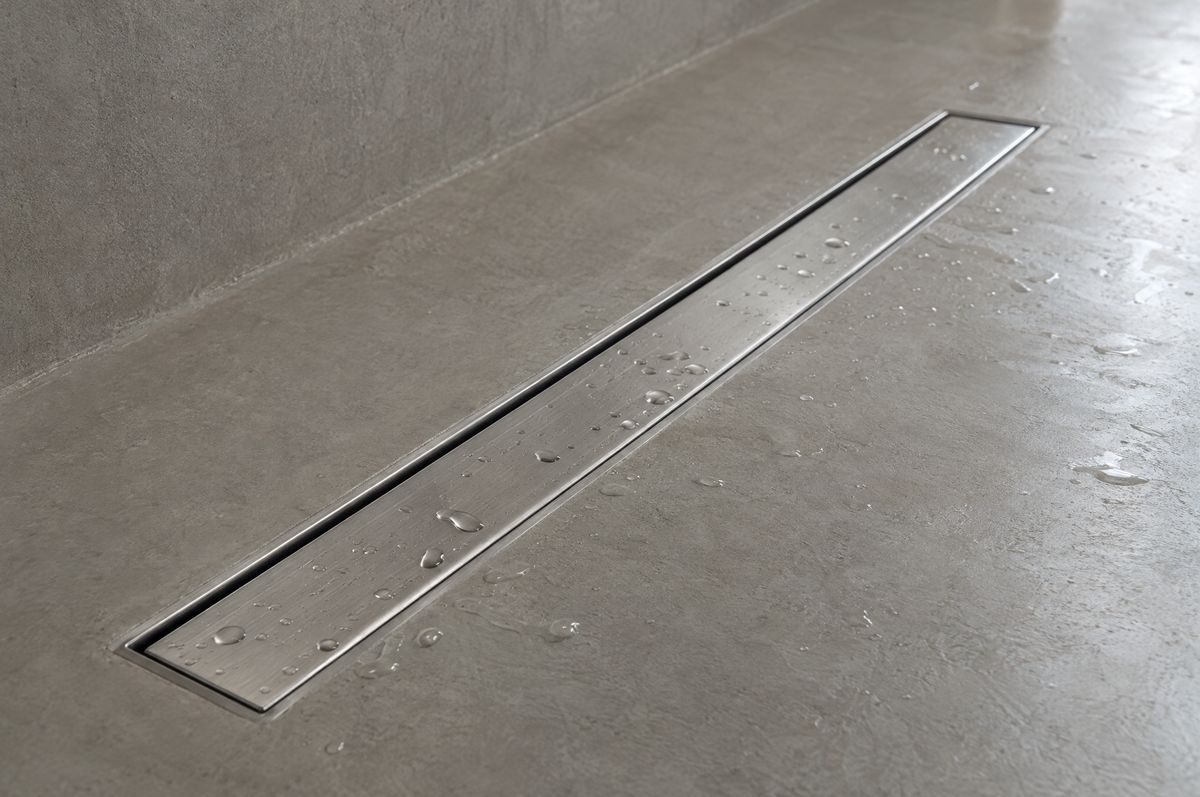
- A waterproof system, with waterproofing under the microcement.
- Made-to-measure shower trays, ready for microcement.
- A linear or round drain, to suit the design.
- Washbasins and baths in the same material and tone.
Made-to-measure shower tray
We make the shower tray to fit the space, ready for microcement. That is why the shape of the tray and the position of the drain are agreed in advance, at the assessment, not during the work.
Linear or round drain
A linear drain is a long, narrow grate in the floor, and a round one is a classic drain. Which one goes into your bathroom is agreed according to the bathroom design.
Washbasin and bath in the same material
We make the washbasin and bath in the same material and tone as the floor and walls. That way the whole room looks like one piece, with no joints where surfaces meet.
How this is done when the old tiles stay underneath is covered in our article on microcement over tiles.
How do you clean microcement in a bathroom and deal with limescale?
Microcement in a bathroom is cleaned with a damp cloth and a neutral cleaner. Limescale removers are often acid-based, and acids and abrasives attack the protective topcoat of microcement. So limescale on microcement is prevented by regularly wiping off water, not by strong limescale removers.
Grout lines versus one surface
On tiles, dirt and limescale mostly collect in the grout lines. Microcement has no grout lines, so the surface is wiped in one go, from floor to wall.
What to do and what to avoid
- Wipe the surface with a damp cloth and a neutral cleaner.
- After showering, wipe the water off the surface so limescale does not build up.
- Do not use acid-based cleaners.
- Do not use abrasive cleaners or rough scourers.
- When the protective coat wears, call us to renew it, without demolition.
How often the coat needs renewing depends on how much wear the surface gets. How microcement holds up after years of use is covered in our article microcement pros and cons.
How is microcement installed in a bathroom and how long does it take?
Installing microcement in a bathroom has five steps: choosing samples at our showroom, assessing the substrate, the quote, installation and handover. The base microcement system takes at least five days, plus time to prepare the substrate. The bathroom cannot be used during that time, because the layers must not be walked on while they dry.
- Samples. At our showroom you choose the texture and colour, and you can take a finished sample home to see it in your own bathroom.
- Substrate assessment. We look at the tiles or walls underneath and propose the preparation, including waterproofing.
- Quote. You receive a detailed quote for all the work, including the shower tray, washbasin or bath if we are making them.
- Installation. Waterproofing, 5 to 7 layers of microcement and a protective topcoat suited to the humidity of the room.
- Handover. We walk through the bathroom together and show you how to look after it.
The work is dry with no chiselling, so there is none of the dust that comes with removing tiles. If the bathroom is part of a larger renovation, microcement goes in last, once the other work is finished.
What to prepare before the assessment
- Photos of the existing floor and wall tiles.
- The approximate floor area of the bathroom.
- The layout: where the shower, washbasin, bath and toilet are.
- Whether you are changing the layout or keeping it.
- Whether you want a shower tray, washbasin or bath in the same material.
- Whether the bathroom is being done on its own or as part of a larger renovation.
When are tiles the better choice for a bathroom?
Tiles are the better choice for a bathroom when you want a completely uniform factory surface, a particular tile pattern or size, or when you do not want to give up cleaning with strong products. Microcement is made by hand, with slight variations in tone, and its protective topcoat does not tolerate acids or abrasives.
- You want every surface to look identical, with no trace of the hand.
- You want a particular pattern, design or tile size.
- You regularly use strong limescale removers in the bathroom and do not want to change that.
- The substrate is unstable and cannot be repaired, so a crack would carry through to the microcement.
- The bathroom cannot be left out of use during installation and while the layers dry.
Tiles do not solve everything either. A bathroom without joints, without demolition and with a shower tray in the same material is not something tiles can give you. See the systems, textures and colours on the microcement page.
To have your bathroom assessed, send us the location and photos of the existing tiles through the enquiry form.
Frequently asked questions
Does microcement let water through?
We install microcement in bathrooms as a system: waterproofing underneath, and a protective topcoat chosen for the humidity of the room. The shower gets a waterproof system. The surface stays mineral, lets vapour through and is easy to clean, because there are no grout lines for water to sit in.
Can microcement be used in a shower?
Yes, with a waterproof system. We lay waterproofing under the microcement. We make shower trays to measure, with a linear or round drain, and the washbasin and bath in the same material, so everything stays one surface.
Is microcement slippery when wet?
How slippery microcement is depends on the finish. We choose the finish for the use, and in bathrooms and showers we add an anti-slip treatment where needed. This is decided before installation, when you choose the texture and sheen.
How do you remove limescale from microcement?
With a damp cloth and a neutral cleaner. Do not use acid-based cleaners or abrasives, because they attack the protective topcoat. It is best to wipe off the water after showering, so limescale does not build up at all. When the protective coat wears, we renew it without demolition.
How long does a microcement bathroom renovation take?
Installing the base microcement system takes at least five days, plus time to prepare the substrate. The bathroom cannot be used during the work, because the layers must not be walked on while they dry. There is no chiselling, so there is no rubble to take away either.
Can microcement go over old bathroom tiles?
Yes, if the tiles are solid and none of them move. Nothing is demolished, with no chiselling and no skip. We still lay waterproofing under the microcement, and we assess the shower area on site.